I
Enterprise Scalability
Designing robust, highly-available cloud infrastructures capable of processing massive data throughput — without friction or failure.
→
Available for select engagements · 2026
I'm Soumya Swaraj — founder of Evergrow and a former JPMorgan Chase engineer. I help companies take AI from prototype to production: LLM agents, RAG and agentic workflows on AWS that stay fast, reliable and affordable as usage grows.
I design AI and cloud systems for companies that can't afford for them to break.
I learned the craft at JPMorgan Chase, building data platforms inside a bank that moves billions of dollars a day. Today I run Evergrow, where teams of AI agents research, write and fact-check content made for AI search.
Available for select AI & cloud engagements in 2026.






Platform engineering
Decoupled, event-driven AWS platforms built to absorb traffic spikes and survive the loss of a zone without dropping a request. Run either scenario below.
Pick a scenario to watch the platform respond.
Throughput
10M+
requests a day, routed with zero downtime
Efficiency
1.5M+
compute hours saved across 400+ batch feeds
Stack
Self-healing data pipelines
80% fewer daily production tickets
Back in high school, I built a gaming community that grew to 15,000 members, then watched it collapse on shared hosting. The code was fine. The system around it wasn't.
Every project since has started with one question: what happens when this works? More users, more data, more agents, more money moving through it. I design for that day first, so growth shows up as revenue instead of an outage.
Capacity, cost and failure modes get planned before the first user arrives, not after the first outage.
Good systems detect, diagnose and fix the common problems themselves. People handle the rare ones.
Revenue earned, hours saved, tickets closed. If it can't be measured, it isn't finished.
Designing robust, highly-available cloud infrastructures capable of processing massive data throughput — without friction or failure.
Moving beyond basic LLM wrappers to engineer intelligent, multi-agent ecosystems that automate deep research and complex, multi-step problem-solving.
Approaching engineering through the lens of a founder. Every architectural decision driven by product-market fit, user growth, and actionable business metrics.
Five case files, from a bank-scale data platform to an AI content engine. What was broken, what I built, and what changed, with the numbers.



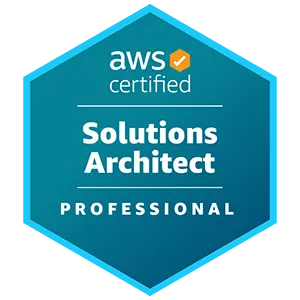
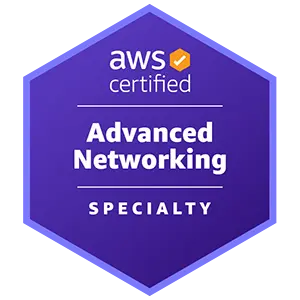
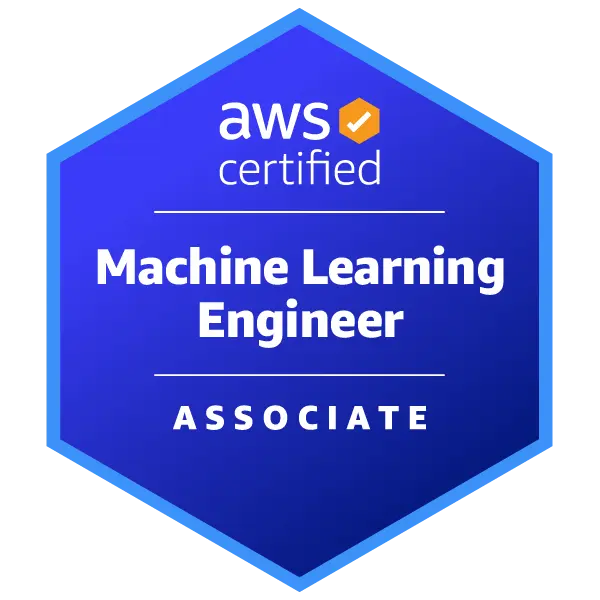
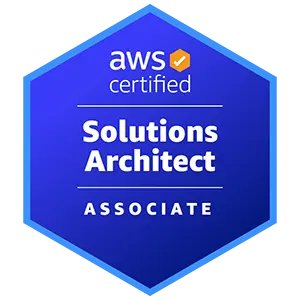
Issued by AWS across architecture, networking, machine learning and development. Open any certificate to view it.
Long before the enterprise work, I was shipping products that found real users. Each building in the model is one of them, sized to the audience it reached.
Building height shows audience size, on a log scale.
30K gamers
Walkthroughs, tools and community Q&A for players.
15K members
A clan-based network for the RPG games I played, built in a ten-day PHP marathon in high school. It grew to 15,000 members, then collapsed on shared hosting. The lesson stuck: scale has to be designed in.
~100 sites
Free hosting and provisioning for about a hundred sites, run before I knew the word multi-tenant.
30K students
An on-site management system that cut processing time by 70%.
10K+ users
The go-to builder for campus societies: ticketing and apps used by more than ten thousand students.
15M organic hits
A community-driven recommendation site that spread across 20+ colleges in India and reached 15 million organic hits through search and word of mouth.
800K+ users
Live case counts, regional breakdowns and trusted public-health guidance, shipped during the pandemic.
2 universities
Content platforms for two universities, alongside leading web and mobile at the Google Developer Club.
50K reads
A co-built publishing community with 50K reads and 20K social reach.
Nine launches since 2014. Most of them shipped before graduation.
Scalability limits everything.
Growing up in Dhanbad — a 25 Mbps modem and an audacious dream. Fuelled by the desire to communicate across the globe, I coded my first social network from scratch.
After a 10-day PHP coding marathon, I launched my clan based gaming social network that hit 15,000 members. The site collapsed under its own weight on shared hosting. That failure taught me a lesson I've used every day since: scalability limits everything.
Built a movie recommendation site to 15M organic hits. Shipped a counseling system used by 30K university students. Built CMSes for Virginia Tech and TIET. Ran web & mobile for the Google Developer Club. Became the campus's go-to engineer for anything that had to scale.
Re-architected legacy data platform into a cloud-native platform on Aurora Serverless, Kinesis, Firehose, S3, Lambda, SNS and others. Routed 10M+ daily requests. Built some of the earliest enterprise-grade LLM monitoring agents with self-healing capabilities. Contributed to $1M+ in annual savings.
Building the AI Content OS — a multi-agent system with adversarial personas producing rigorously-researched, authoritative content for the age of generative search. Platforms that don't just scale — they actively drive revenue.
Building scalable systems requires intense focus — but the best ideas often happen away from the screen.
When I'm not architecting AI ecosystems or optimizing cloud infrastructure, I'm usually resetting my competitive drive on the badminton court or diving into a good fiction novel. I prefer "chill" travel — finding quiet hill stations or beaches over high-intensity trekking — and I am perpetually on the hunt for the perfect cup of Adrak Chai.